Includedat no extra cost
When you book a boat through our agency
The charter company pays us a standard booking commission that covers your Skipper Hotline Assistance.
- Lowest boat price guaranteed*
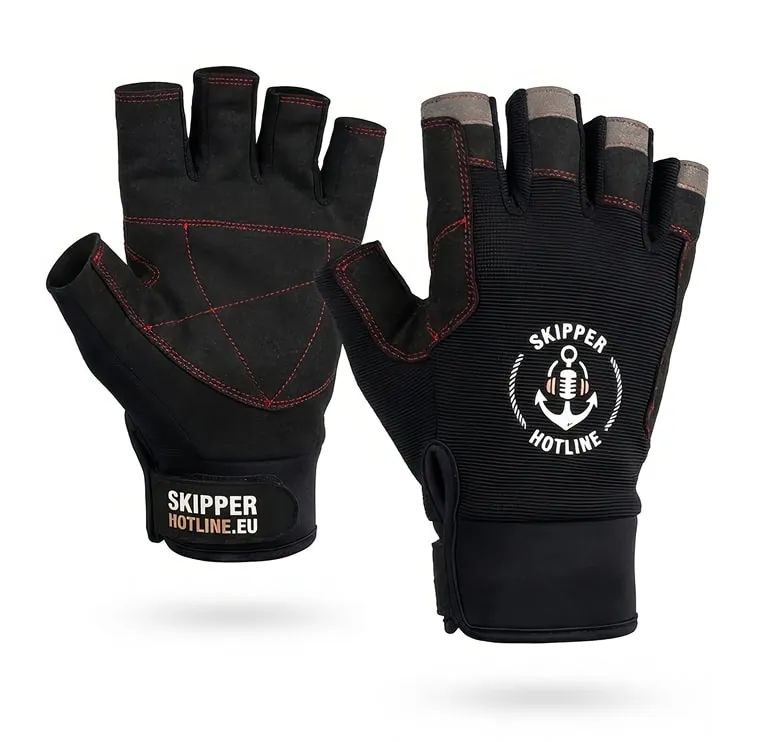
- Welcome gift: sailing gloves
helping you sail easier & safer
WhatsApp advice on your boat booking and every day of your sailing trip in Croatia (real human, no AI!)
Client chat example
You might get a storm tonight, so double the ropes on the buoy. If it gets strong, I usually keep the engine on so I can react quickly.
All buttoned up, buoy lines doubled 👍
34 kt so far! We're in the cockpit enjoying the show 😅
With your warning, every loose item was secured. Everybody else is running around trying to catch their paddle boards. So thanks!
Well done! Sleep well once it passes 🙂
and get Skipper Hotline Assistance included at no extra cost

An independent local skipper will advise you on a well-maintained boat, a reputable charter, and an easy-to-dock marina.

The right anchorage, buoy or marina each night, plus dinner reservations and water refills, planned for your crew, with daily weather adjustments.

Warnings about local storms (Neveras) and wind changes, with advice on where to dock or anchor safely every night.

A local skipper follows your trip on WhatsApp, sends advice when needed and answers all your questions, 8–22h daily.
Benefits of booking with our agency
Price match
Found the same boat cheaper elsewhere? We match that price, and Skipper Hotline Assistance stays included.

Skipper Hotline Assistance
Route planning, storm warnings and a local skipper on call, before and during your trip.
As your booking agency, we receive a standard commission from the charter company, which allows us to include Skipper Hotline Assistance with every booking at no extra cost.
Website booking requestSailboat · 11–25 July · 6 people We're a family, first time sailing in Croatia. I skippered our own 34 ft for 9 years up north. We'd like anchorages for swimming and a few marinas with nice restaurants.
Thanks! Let's pick the area first, then I'll send you boats. Are you flying or driving? Zadar airport is small. Rijeka airport is on Krk, 20–30 min by taxi to Punat marina.
For boats I'd set: 1–7 years old (older charter boats are often worn out), no extremely narrow marinas, and no charters with poor maintenance. Do you want a bow thruster? Furling or full-batten main? How many cabins?
We're driving. Never used a bow thruster, either main works, 3 cabins.
Here are 10 boats from Krk, the Zadar list comes next. I've already taken 5% off, from my own commission. If you find a lower price anywhere else, I'll match it, so you still get the hotline at no extra cost.
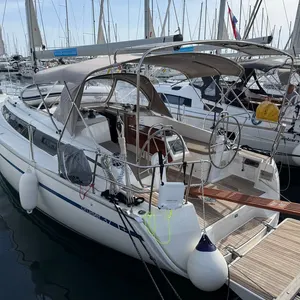
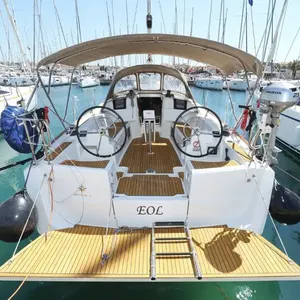
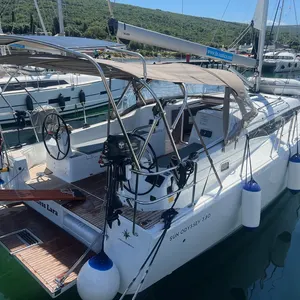
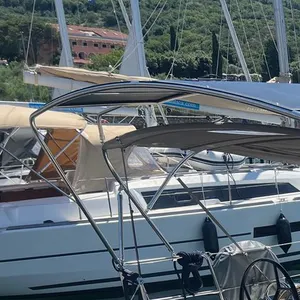
We'd like to stay under 40 ft for our first trip. We like these 3: Bavaria Cruiser 37, Sun Odyssey 389, Sun Odyssey 380. Kvarner or Zadar?
Honestly, both are good. Kvarner has fewer boats and more anchorages, but the wind goes from strong Bura to nothing. Zadar has a steady afternoon Maestral, but it's busier, with buoys everywhere (50–100 € a night). I prefer Kvarner, it's less stressful. But I grew up here, so I might be biased 🙂
Any of the 3 is a good choice, but I'd point out the Sun Odyssey 380. It's the newest, so it should be in the best condition, and it has 2 toilets. The wide stern gives you the most comfortable cockpit, but it's a bit harder to dock. Prices are already low, so I'd book now, before the good boats go.
We'll go with your recommendation, the 380. What are the next steps?
I've reserved it for you right away, it's held until the 26th. Send me your details and I'll send the invoice. Do you want your route now, or a few weeks before? Either way, I'll adjust it to the fresh forecast a few days before you sail.
Today
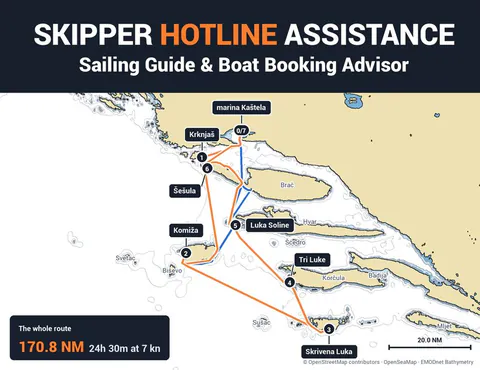
Kastela 29-8 Patrick.pdf
Your route: plan A and B for every day, with miles, bays, reservations and water refills. On Monday the week forks: A goes to Lastovo, B stays north and trades the crossing for two more days of swimming.
One rule for the Split region: plan 3–4 days ahead. Reserve spots on time, or arrive before 10 AM to get an anchoring spot.
Already booked buoys for Sunday (Luka Soline) and Monday (Rukavac, Vis) 👌
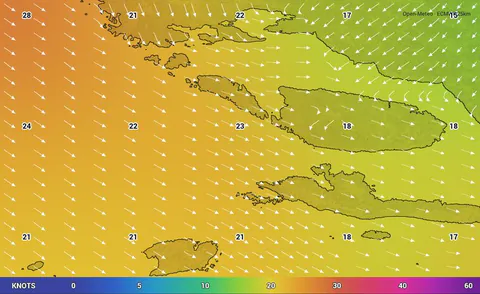
So this is Thursday 🙈 Do I already need a safe marina?
I wouldn't risk it on a buoy. It can still change, but if you don't mind risking ~200 €, I'd reserve Wednesday at ACI Palmižana. Milna and Maslinica are open to that wind, so I wouldn't pick them.
That's why I'm so happy to have you next week. I feel more confident with your knowledge to make the right decisions.
Monday
Had a great time at the wreck today! 😊 Tonight we're in Sakarun.
Tomorrow's plan is the cave and the Dragon's Eye in Brbišćica, then on to Brbinj. Wind direction looks good for anchoring there.
Nice! Tomorrow the wind will change quite a bit. 9 AM might be too much for Brbišćica, but there should be a calm window from 10 to 12.
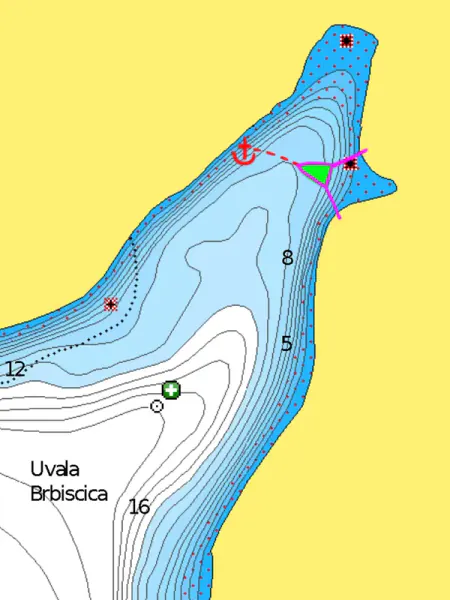
Anchoring in Brbišćica is a bit tricky. It's steep and deep, and the middle is covered in seagrass. Drop the anchor on the opposite side of the bay, out of the seagrass, and take a stern line to the other shore. Give it some room, don't get too close to the rocks.
If it's windy, don't anchor. Just drop the crew at the cave and keep someone at the helm, that's how I usually do it.
Sounds good. Thank you!!! Great explanation 😁👌
Happy to help 😊 Good night!
Tuesday
Good morning! How was the night?
Very quiet and calm, we slept like babies 😴 Leaving now for Brbišćica.
We tried, but the anchor didn't hold, so I just dropped off the crew like you suggested 👍 Now sailing on to Brbinj ⛵
Good call, safety first 🙂 Enjoy the sailing!
I'm watching some Neveras forming in the north! Where are you now?
Thank you 😳 We're at the north tip of the island, about 40 minutes from Brbinj. Still sailing, nice wind today!
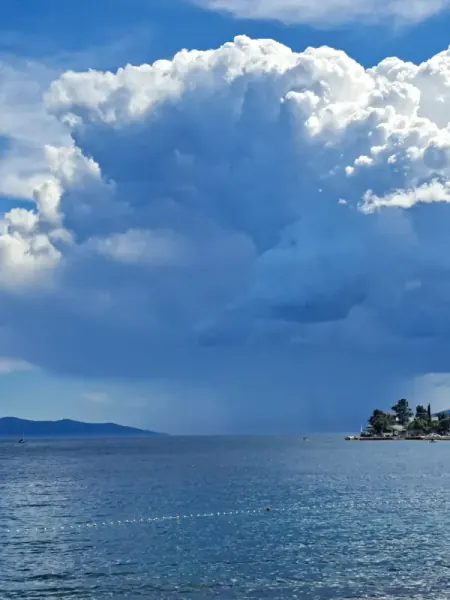
Just so you know how a Nevera looks. It can look a bit different.
To be safe, take the sails down now, close all hatches and windows, and get the rain jackets ready. If it hits you, keep the bow into the wind and motor straight through. It usually lasts 15–45 min, then it's calm again. Just don't try to dock or anchor during it.
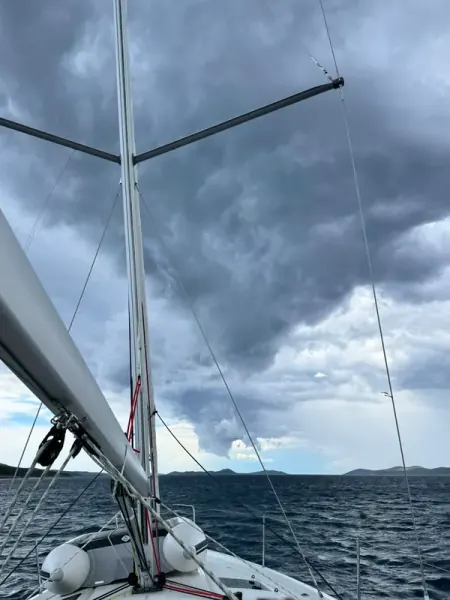
Sails are down. Looks somehow interesting here 🙈
Yes, the dark bottom of those clouds is a sign of storm or rain. Keep going on the engine 👍
That was strange, rain and 40 kn of wind for ~10 minutes 🤔 Now everything is calm and we are on the buoy ☺️👌
Well, that was a Nevera too 😮 A very short one.
I was just happy we had the sails down 🙈
Exactly. It's good you had a free demonstration, now you know how it looks. If you see something similar: sails down, always 🙂
That really was a great demonstration! Especially how quickly it comes.
Thursday
Good morning! My advice for today is to refuel at Triluke (Zaglav). Tomorrow all charter boats go back to base, and the fuel queue can take 1–2 hours. *You will mostly sail tomorrow, so your tank will still be full on return.
Done! Only two boats in front of us 😅
Lucky you 🙂
Friday
Safely back in the marina 😁👌 15 kn from the front while docking… thank god for the bow thruster!!!
The thruster is awesome sometimes 😄 Well done 💪💪💪
Thank you again for everything!!! It was a great week, and it gave us such peace of mind. Thanks for checking in on us 🙏
Thank you! It was a pleasure to follow your trip. Safe trip home 🙂
You haven’t booked a boat yet
When you book a boat through our agency
The charter company pays us a standard booking commission that covers your Skipper Hotline Assistance.
You have already booked a boat
7-day standalone pass
The same full assistance for 7 days, from route planning to your last day on board.
* If you find a lower boat price elsewhere, we will match it so you can use Skipper Hotline Assistance at no extra cost.
Skipper Hotline Assistance is support on WhatsApp for beginner and recreational skippers sailing in Croatia. An experienced local skipper, a real person and not AI, helps you choose the boat and the base marina, plans your route, suggests anchorages, buoy fields and marinas, sends you storm and weather warnings, and helps you with everyday skipper decisions during your charter week.
It is included at no extra cost when you book your boat through Skipper Hotline, and it is also available as a 7-day pass for boats booked elsewhere.
Yes. Skipper Hotline is an assistance service built around a boat booking agency. When you book your boat through us, the charter company pays us a standard commission, usually around 10 to 15 percent, and that commission pays for your assistance.
You pay the same price for the boat as you would if you booked directly, and Skipper Hotline Assistance is included at no extra cost.
Yes. You can buy a 7-day pass for €240. It includes the same support as the assistance included with a booking: route planning, weather and storm warnings, recommendations for where to stay each night, and help with everyday decisions during your trip. Only the advice on choosing a boat is not included, because your boat is already booked.
If the pass doesn't meet your expectations, we refund the €240.
Yes. Some crews join a flotilla, where several boats sail a fixed route behind a lead boat. Others take an instructor on board for the whole week. A third option is remote support from a local skipper.
Skipper Hotline gives you an experienced local skipper on WhatsApp before and during your trip. Before you leave, you get a route plan and advice on the boat and the marina. During the week, you get route changes for the weather, storm warnings, tips on anchorages and marinas, and a second opinion whenever you are not sure. Live chat support runs every day from 8:00 to 22:00, and we check in with you ourselves, not only when you ask.
You keep your privacy and all your cabins, and you are still the skipper. It is included when you book the boat through us, or available as a 7-day pass for boats booked elsewhere.
A Nevera is a sudden summer thunderstorm. It often forms over Italy and crosses the Adriatic, so it usually comes from the west. It can arrive within minutes, sometimes at night, with gusts that can go over 40 knots, heavy rain and lightning. It usually passes within one or two hours.
On the night of 19 July 2026, a Nevera hit Potkujni bay on the island of Unije with gusts reported up to 60 knots. Buoys were torn from the seabed and several boats were pushed onto the rocks.
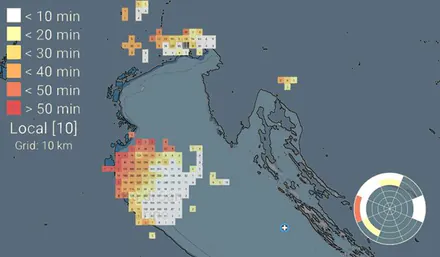
A Nevera is not hard to predict if you know where to look. The problem is that it is invisible in wind apps and in regular weather forecasts. Check the marine forecast every day for a thunderstorm warning, estimate from which direction a possible Nevera would come, follow storms live on a lightning radar map, and choose a bay or marina protected from that direction. Skipper Hotline does this for you every day of your charter and warns you in time to change your plans.
Start with the wind, not with the map:
This is exactly what Skipper Hotline does. We design the route around your crew, boat and wishes, adjust it to the latest forecast before you leave, and keep adjusting it every day during the week.
Yes. Croatia is one of the easiest places in the Mediterranean for a first charter. There are hundreds of islands close to each other, many sheltered bays and marinas, and very small tides. In Dalmatia, a steady northwest wind (the maestral) blows on summer afternoons when the weather is stable.
What makes it harder is the local detail: marinas where you dock stern-to between other boats, bays that are safe in one wind and dangerous in another, sudden summer storms (Neveras), and limited water on some islands. This local knowledge is what Skipper Hotline gives you: an experienced local skipper on WhatsApp before and during your trip.
For most crews, June and September. The sea is warm (around 22 to 24 °C), the summer winds are steady, and there are fewer boats than in July and August.
July and August are the warmest months (sea around 24 to 25 °C), but also the busiest and most expensive. Popular bays and marinas are full by early afternoon. May and October are cheaper and quieter, but the sea is cooler, some restaurants and buoy fields are not open yet or are already closed, and the weather changes more often. Summer thunderstorms (Neveras) can happen in any summer month.
Skipper Hotline plans your route for the month you sail in: where to go, and what time to arrive to still find a place for the night.
For a first charter, Kvarner and the Zadar region are the easiest.
The Zadar region (Sukošan, Biograd and the Kornati) has many buoy fields, so you can find a safe place for the night even if you are not yet confident with anchoring. Kvarner (Krk, Rab and Cres) is the least busy region, with green islands and quiet towns, but it has fewer buoy fields, so you will anchor more often. It is also easy to reach by car from Central Europe, and Rijeka airport is on the island of Krk.
The Split region is more challenging for a first charter in July and August, because of the crowds and the logistics. It is extremely busy and harder to organize, water is limited on the outer islands, and on Vis you can't reserve a berth or a buoy at all.
Istria is easy to reach and has good marinas, but fewer islands nearby. Dubrovnik has the old town, Mljet and the Elaphiti islands, but fewer islands and longer distances between stops.
Skipper Hotline supports all these regions and helps you choose the base that fits your crew, your travel plans and your experience.
The boat is the biggest cost, and its age makes a big difference. In 2026 price lists, a 40 ft sailboat with 3 cabins cost roughly:
May, June and September are in between. Many boats have discounts of 30 to 40 percent on these prices, so the price you pay is often lower. A catamaran of the same length usually costs 1.5 to 2 times as much as a sailboat.
On top of the boat, plan for the transit log and final cleaning (about €180 to €350), tourist tax (about €1.30 to €2 per person per night), fuel (about €150 to €250 for a sailing week), marinas (about €100 to €150 per night for a 40 ft boat in season) or mooring buoys (about €50 to €80), national park tickets, food and restaurants, and a skipper if you need one (about €200 to €250 per day plus food).
Mixing nights at anchor, on buoys and in marinas keeps the cost down. When you book through Skipper Hotline, you pay the same price for the boat, and the assistance is included.
The main booking season is January to March, so there is no need to book in the autumn before. At the moment there are more charter boats than customers, and many boats have discounts of 30 to 40 percent all season. That is why booking earlier or later doesn't change the price much.
The real reason to book early is choice. Early in the season you can pick from more boats and get the one that best fits your crew, route and budget, for example a newer boat with a bigger water tank and a bow thruster, at a base marina that is easy to leave and return to. Last-minute bookings are possible, but with less choice.
Send Skipper Hotline your dates, crew size and region, and we send you a shortlist of boats with an honest comment on each one.
Yes, if you sail without a hired skipper (bareboat charter). The skipper needs a boating license recognized by the Croatian Ministry of the Sea, for example an ICC, RYA Day Skipper or higher, many European national licenses, or the Croatian "Voditelj brodice" license. Some US certificates, such as ASA, are also on the Ministry's list.
Unless your license already includes radio, you also need a VHF radio certificate (SRC), because practically every charter boat has a VHF radio. The charter company checks the original documents at check-in.
No license? Hire a skipper, or take a course first. Not sure your license is accepted? Send it to Skipper Hotline and we will check it for you.
Yes, but it is not advisable to charter without proper training. A license shows that you passed an exam. It doesn't prepare you for stern-to docking in a full marina, for choosing a safe bay for the night's wind, or for a sudden storm.
The best preparation is the Skipper Hotline Skipper Training in Punat on Krk: 7 days with short theory and a lot of practice, including docking drills, anchoring and buoys, sailing, safety, and 3 days of cruising around the nearby islands.
If you mainly need docking practice, take the docking training (2 to 3 days). If you prefer individual teaching, book private lessons with one of our instructors. If you don't want to skipper alone yet, you can hire an instructor or a skipper for the whole charter week.
After the training, Skipper Hotline stays with you on WhatsApp during your charter as an experienced local skipper. It is support after the training, not a replacement for it.
If nobody in your crew has a recognized license, you have to. A skipper costs roughly €200 to €250 per day plus food, and needs a cabin. It is a good choice if the crew has no sailing experience, if you want a completely relaxed holiday, or for a large catamaran in high season.
If you want to be the skipper yourself, prepare with training before the trip: the Skipper Hotline Skipper Training, docking training or private lessons. Then sail with Skipper Hotline on WhatsApp as your backup, or take an instructor on board for the whole week. When you book your boat through Skipper Hotline, we can also arrange a vetted local skipper.
Most marinas and town quays in Croatia use stern-to (Mediterranean) mooring. You reverse into a narrow gap between two boats, pick up a mooring line (lazy line) that is fixed to the seabed and tie it at the bow, and tie two lines from the stern to the pier. For new skippers this is the most stressful part of the week, mostly because of crosswind, prop walk and full marinas on changeover days.
What helps: a base marina with enough space (we avoid the narrow ones), a bow thruster, a clear job for every crew member, and practice. The Skipper Hotline docking training in Punat on Krk (3 days on a sailboat or 2 days on a catamaran) is repeated stern-to and side-to docking, buoy pickup and anchoring in real marina conditions. During the charter we also help you with tricky moments on WhatsApp, for example how to leave a tight spot using spring lines.
These are the ones we see every season:
Skipper Hotline is built to prevent exactly these mistakes, with a route that fits your crew, daily weather advice and local tips.
Most charters in Croatia run from Saturday to Saturday. Check-in is usually around 17:00 on Saturday, and the boat must be back at the base on Friday evening, often by 18:00, for the check-out inspection.
So keep the first day short: shop for food, check the boat carefully, and either stay in the base marina or sail about 2 hours to an easy, sheltered place nearby. On the last day, stay close to the base, refuel early in the morning and keep the last leg short. If strong wind is forecast for Friday, it is often smarter to come back on Thursday evening. Skipper Hotline plans both days into your route, so the week starts and ends without stress.
Pack light and soft: a soft bag instead of a hard suitcase (there is little storage on board), shoes with soles that don't leave marks, a hat, sunglasses and strong sunscreen, a light windproof jacket for the evenings, a headlamp, a snorkel mask, a power bank, and cash for buoys and small konobas (local restaurants).
Sailing gloves help with the lines, and every boat booked through Skipper Hotline comes with a pair as a welcome gift. Subscribe to the Skipper Hotline newsletter and we send you our full skipper and crew packing list.
A simple rule: one double cabin per couple, and don't plan to sleep in the saloon. As a guide, 4 people need a 36 to 40 ft boat with 2 or 3 cabins, 6 people a 40 to 46 ft boat with 3 or 4 cabins, and 8 people a 45 to 50 ft boat with 4 or 5 cabins, or a 40 to 45 ft catamaran.
Bigger is not always better on a first charter. A longer and wider boat is harder to dock and costs more in marinas. Some things matter more than the brand: the water tank (for 6 people we look for at least 450 liters), a bow thruster, a furling mainsail if the crew is new, and the age and maintenance of the boat. Skipper Hotline filters boats by these points, not only by price, and tells you which one we would choose ourselves.
Both work. A catamaran gives more space and privacy, stays flat at anchor and while sailing, and with two engines far apart it turns easily in tight spaces. But it costs 1.5 to 2 times as much to charter, marinas usually charge about 1.5 times the sailboat price (some charge double), fewer berths are wide enough, and its high sides catch a lot of wind when docking.
A monohull is cheaper, sails better upwind and fits into more marinas. For families and groups who want comfort, a catamaran is great. For crews who want to really sail, a monohull is often more fun. Skipper Hotline helps you choose based on your crew, budget and route.
Look further than the price. The same boat model can be well maintained by one company and in poor condition at another. Some base marinas are narrow or open to the wind, which makes leaving on Saturday and returning on Friday stressful, especially in strong wind. Check the age of the boat, how the company maintains its boats and helps you if something breaks during the week, the marina layout, and how you will get there (by car or by plane).
Skipper Hotline is an independent booking agency run by local skippers who work on charter boats and dock in Croatian marinas every season. We can tell you which boats and marinas we would avoid, and why.
No. You pay the same price whether you book directly with the charter company or through an agency. The agency's commission comes out of the charter company's own price, and charter companies don't lower their price for clients who book directly.
Skipper Hotline uses its commission to include full Skipper Hotline Assistance with every booking. If you find a lower price for the same boat and week at another agency, we match it.
Four names cover most situations:
The same bay can be perfect in maestral and dangerous in jugo. That's why Skipper Hotline chooses your bay for the night based on that night's forecast, not on how nice the bay looks.
The bura is dangerous mainly if you are in the wrong place. It blows from the northeast in strong gusts, often jumping from 20 to over 30 knots within seconds, and it builds short, steep waves in the channels. It is strongest in Kvarner and in the Velebit channel. In winter its gusts can reach hurricane strength, and in summer it can easily blow for two days.
The usual problems are anchors dragging, boats pushed onto their neighbors in marinas, and rough crossings. The good news is that the Croatian weather service forecasts the bura well, so you can plan around it: choose a bay or marina protected from the northeast, use extra lines, and cross before or after it. Skipper Hotline is based in Kvarner and plans your days around the bura forecast.
Use the DHMZ marine forecast (meteo.hr) for warnings. Read the first paragraph, where the warnings are, and look for a thunderstorm (Nevera) warning. The rest of that forecast is too general for planning your day.
For the wind, use an app such as Windy or PredictWind, and always look at the gust forecast, not only the average wind. These apps offer several forecast models. They usually agree for the next one or two days and often disagree from the third day on. You can keep the app's default model. Just remember that the forecast can be a bit off, and plan with some margin.
Skipper Hotline reads the forecasts for your route every day and tells you what they mean for tonight's bay: gusts behind a hill, wind funneling through a channel, or waves coming from a different direction than the wind.
Call 195, the Croatian maritime search and rescue center (MRCC Rijeka), from any phone. You can also call 112, or use VHF channel 16 (Mayday or Pan-Pan). The nIS app from the Croatian Ministry of the Sea can call 195 and send your position automatically.
Skipper Hotline is not an emergency or rescue service. When you are in danger, always call 195, 112 or VHF channel 16 first. We help with everything around it: advice before a situation becomes dangerous, and local contacts such as mechanics, marinas and taxis afterwards.
There are four options, and most crews mix them:
Skipper Hotline suggests the best option for every night, based on the forecast, your crew and your budget.
There is no single system. ACI (22 marinas along the coast) and many private marinas take bookings online or by phone, and ACI holds a booked berth until 20:00. Buoy fields are run by different operators. Some take reservations by phone, and some take none at all, for example on the island of Vis.
From June to September, book about 3 days ahead in Dalmatia and 1 day ahead in Kvarner. If bad weather is forecast, book as early as you can, because everyone heads to the same safe harbors. Where you can't book, arrive early: in high season aim for early afternoon, and before a day of bad weather as early as 9 or 10 in the morning.
Skipper Hotline shares its list of reservation phone numbers with you and always keeps a Plan B.
Water is the bigger problem. In summer many island marinas limit water, for example to one hour a day on Vis and at Žut in the Kornati, sometimes at a high price, and some places have no refill at all. A crew of six can easily use more than 100 liters a day, so the tank size and the refill stops must be part of the route. That's why Skipper Hotline recommends a boat with a bigger tank, or a watermaker on bigger boats, when it makes sense, and plans realistic refill stops.
There are fewer fuel stations than you would expect, and near the charter bases they have long queues in the afternoon and on Fridays, so go early in the morning. The water in the boat's tanks is for washing, so buy drinking water. The fuel stations are also listed in our 101 Sailing Croatia booklet.
Yes. These are the parks most crews visit:
Skipper Hotline tells you where tickets are cheaper and which park days fit your route and the weather.
Most crews enjoy 10 to 20 nautical miles a day, which is about 2 to 4 hours underway at 5 to 6 knots. That leaves time for swimming, lunch at anchor, and arriving early enough to find a place for the night.
Sailing upwind takes longer than the straight line. A 20 NM trip against the wind can become 28 to 30 NM of tacking, so plan 5 hours instead of 3.5 by motor. In Dalmatia, the maestral usually starts late in the morning, so leave early for calm water, or around 11:00 if you want to sail. Skipper Hotline plans each leg with realistic hours for your boat and crew.
Yes. Skipper Hotline plans the route for every client. First we ask about your base marina, your crew and your boat, including its water tank. Then we ask a few simple questions: how many nights you want at anchor or on buoys and how many in marinas, whether you prefer quiet nature or villages and towns, how often you will cook on board or eat in restaurants, how many hours a day you want to sail (ideal and maximum), and which places you really want to see.
From that we design a route with distances, times and options for every night. Shortly before departure, when the forecast is reliable, we adjust it, and during the week we keep adjusting it every day. It is included when you book the boat through us, and for boats booked elsewhere the 7-day pass covers it.
Yes. When the forecast changes, we rework the plan to keep the trip safe and comfortable, for example with shorter legs, a different island or a better-protected bay for the night.
Here is a route we planned for a crew who wanted swimming bays during the day and small towns in the evening, starting from Kaštela near Split airport:
This is a starting point. With jugo or bura in the forecast, we change the order or the islands. For a first charter, June and September are easier here than July and August, when it gets very crowded. A tip: the Blue Cave on Biševo has long queues in summer and closes when there are waves, and the Green Cave is a quieter option.
A loop from Sukošan (Marina Dalmacija) near Zadar:
From Biograd, the Kornati are only about 8 NM away, so start with Žut and the Kornati and come back through Ugljan and the Pašman channel at the end of the week. From Šibenik, start or finish with Krka and Skradin, and add Zlarin, Kaprije or Žirje on the way to the Kornati.
Water is limited in the Kornati area (at Žut marina only one hour a day in summer), so plan your refills. Skipper Hotline turns this into a day-by-day plan for your dates and the forecast.
Kvarner is our home area. A loop from Punat on Krk:
Kvarner is less crowded than Split, the islands are green and the towns are quiet, but the bura blows here more often. The order of the days depends on the forecast: sometimes we go the other way round, and sometimes you stay an extra night. Skipper Hotline is based here, so this is where our local knowledge is deepest.
A loop from ACI marina Dubrovnik:
In settled weather you can swap one Mljet night for Lastovo, about 16 NM from Korčula. Distances here are longer than in the north and there are fewer islands to hide behind, so the route depends more on the forecast, especially on jugo. Skipper Hotline plans the order for the weather and tells you where to go when the wind turns.
No. Most of our clients are skippers chartering in Croatia for the first time, but experienced crews use it too. They use it to save planning time, to avoid local traps such as buoy fields, water refills and difficult marinas, and to check their plans with an experienced local skipper.
Anything about your trip. Typical questions are: Is this bay safe tonight? Should we change islands because of the forecast? Which marina is easiest to enter in tonight's wind? Is this buoy field worth it? How do we dock safely in a crosswind? What is the safest Plan B if we are late?
We also check in with you ourselves during the week, not only when you ask.
If you find a lower price for the same boat and the same charter week at another booking agency, Skipper Hotline matches it. Send us the other offer, and we check that the conditions are the same: dates, boat model, base marina, and what is included in the price (charter fee, extras and payment terms).
If everything matches, we match the price, so you can book through Skipper Hotline and still have the assistance included.
Skipper Hotline was founded by Filip Đurić, a Croatian professional skipper and sailing instructor since 2012, who has been sailing since childhood. The team is based in Rijeka and on the island of Krk, and is made up of local professional skippers and instructors who work on charter boats every season.
Skipper Hotline combines a boat booking agency, WhatsApp support for recreational skippers, and skipper and docking training in Punat. Clients rate Skipper Hotline 5.0 out of 5.
No. Skipper Hotline is an advisory service. We plan, warn and advise so you can avoid most difficult situations, but we don't send boats or people. In an emergency, always call 195 (Croatian sea rescue), 112 or VHF channel 16 first. After that, we can help with local contacts and next steps.
All main charter regions of Croatia: Istria, Kvarner, Zadar, Šibenik, Split and Dubrovnik. Live chat support is available every day of your charter from 8:00 to 22:00, by WhatsApp message or call, and we check in with you ourselves during the week. Route planning and advice on the boat start before the trip.
Apps give you data and reviews, and the charter base helps with the boat. None of them plans your week around the forecast or tells you which bay will be safe tonight.
Skipper Hotline is a real local skipper, not a chatbot, who knows your boat, crew and route. We read the forecast for your exact area, and we know which buoy fields take reservations, where water refills actually work, which marinas are hard to dock in, and which places look good online but disappoint. We use the same apps. The value is in how a local skipper reads them.